
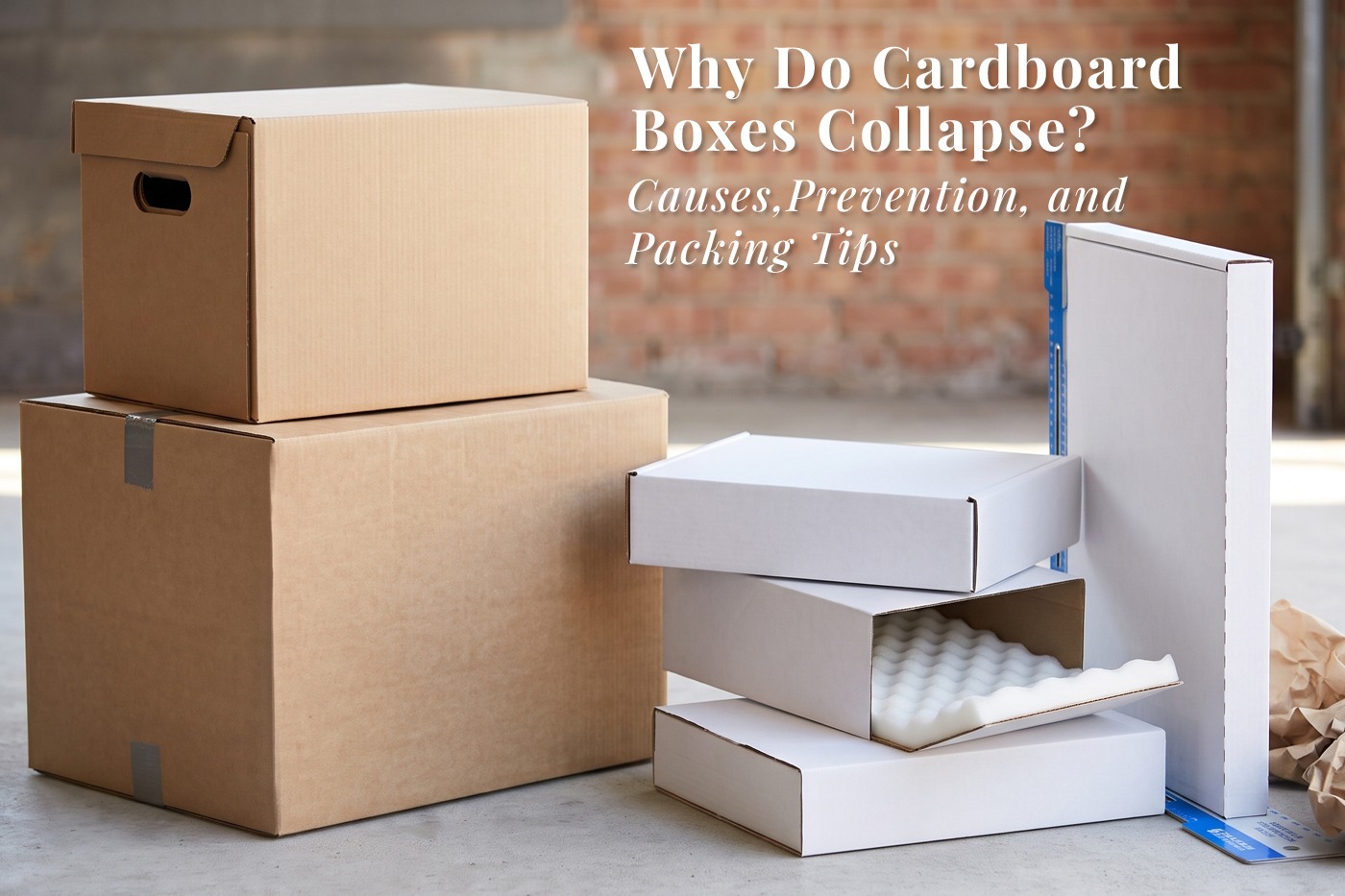
A box that caves in halfway through a delivery costs you more than the product inside. That means a replacement, a courier claim, and a customer who now doubts your business. At Packaging Express Midlands, we hear this story from local businesses almost every week, and it's rarely bad luck. It usually comes down to moisture, weak board, overloading, or poor sealing. In this guide, we explain why boxes fail, how you can prevent it, and what to check before you buy cardboard boxes for your next shipment. Whether you pack a few parcels a day or palletise stock for a warehouse, these practical tips will help your packaging arrive in one piece. Let's start with the causes.
Key Takeaways
- Moisture weakens corrugated board, so dry storage matters as much as the box itself
- Overfilled or badly stacked boxes fail because the walls carry the load
- Match wall strength to the weight of your product, not its size
- Good packing tape and a proper H-seal keep the box rigid
- Choose a supplier who can explain board grades before you order
Why Do Cardboard Boxes Collapse in the First Place?
Moisture and Humidity
Corrugated board is paper, so it absorbs water from wet floors and humid warehouses. Once the fibres soften, the flutes flatten, and the walls can no longer carry weight.
- Wet floors and damp pallets
- Humid or unheated warehouses
- Rainy loading bays and van doors
- Condensation in sealed stock rooms
Overloading and Poor Stacking
A box can only carry the load it was built for. If you overload it or stack it too high, the bottom layer gives way first.
- Heavy items in lightweight boxes
- Pallets stacked beyond a safe height
- Boxes left under load for weeks
- Uneven stacks that press on corners
Weak Board and Poor Sealing
A single wall box that suits a paperback will not survive a set of ceramic mugs. Loose seals add to the problem, because open flaps let the box twist under pressure.
- Board grade too light for the contents
- Flaps left unsealed or half-taped
- Tape too narrow or low quality
- Seams not pressed down firmly
Here is a quick reference for your packing bench.
|
Cause |
Warning Sign |
Quick Fix |
|
Moisture |
Soft, bowed walls |
Store off the floor in a dry space |
|
Overloading |
Bulging sides |
Move up to double wall board |
|
Weak sealing |
Lifting flaps |
Re-tape using the H-method |
|
Poor stacking |
Crushed bottom layer |
Cap stack height and use pallets |
How Can You Prevent Boxes from Collapsing?
Choosing the Right Wall Strength
Single wall boxes suit light everyday items, while double wall boxes handle heavier or fragile goods. If your parcels pass through several depots, it's smarter to buy one grade up in cardboard boxes.
- Single wall for books and clothing
- Double wall for glassware and tools
- Triple wall for machine parts
- Board chosen by weight, not just size
Sealing With Packing Tapes
Your tape is part of the box's structure, not an afterthought. Reliable packing tape holds the flaps flat and prevents the carton from twisting under load.
- Cover the full width of the seam
- Apply an H-seal across the centre and edges
- Match tape strength to carton weight
- Press down so the adhesive bonds
Storing Boxes the Right Way
Good storage protects the board before you even pack the box. A cool, dry spot makes the biggest difference.
- Keep boxes off the floor
- Avoid windows, pipes, and damp walls
- Store flat-packed boxes lying down
- Use older stock first
What Packing Tips Keep Parcels Safe in Transit?
Fill Voids and Pack Snugly
Empty space lets items shift and pushes pressure onto the walls. Fill the gaps so the contents support the box from the inside.
- Use paper or void fill in gaps
- Place heavy items at the bottom
- Keep fragile items away from the walls
- Close flaps without any bulging
Final Checks Before Sealing
A quick check at the end of packing saves returns later. It takes less than a minute per box.
- Shake gently to test for movement
- Check the base is taped and secure
- Look for dents or damp patches
- Add clear handling labels
Different industries face different risks, so packing approaches vary.
|
Industry |
Common Risk |
Packing Tip |
|
Fashion e-commerce |
Damp in transit |
Place items in a poly bag inside the box |
|
Food and drink |
Dense, heavy loads |
Use double wall boxes with dividers |
|
Electronics |
Impact and crushing |
Pack snugly with cushioning on all sides |
|
Furniture and homeware |
Awkward shapes |
Add corner protection and strong seals |
Where Can You Buy Reliable Boxes and Tape?
Searching for cardboard boxes near me is a good start, but the real test is whether the supplier can explain board strength. At Packaging Express Midlands, we supply postal boxes, heavy-duty cartons, and bulk packaging to businesses in the Midlands.
- Advice on courier and pallet needs
- Guidance on board grades
- Support with the right box sizes
- Help with bulk ordering
What to Ask Before You Order?
A few upfront questions prevent most packaging failures. At Packaging Express Midlands, you can choose boxes and packing tape in one place and know they'll work together.
- Which wall strength suits your product
- Whether the size leaves room for void fill
- Which tape suits the journey
- Whether bulk pricing is available
FAQs
Why do cardboard boxes collapse when stacked?
The bottom boxes carry the weight of everything above them. If the board is too weak or damp, or the stack is too tall, the walls buckle, and the pile can fall.
How much tape should I use to seal a box?
For most boxes, one strip along the centre seam, sealed on both edges (an H-seal), is enough. Heavier boxes need a second layer along the edges.
Where can I find tapes like these?
You can find strong box tapes, along with cartons and other packaging supplies, at Packaging Express Midlands.
Can I reuse a cardboard box that has got wet?
Not for anything heavy. Once the board has softened, it loses strength, even after drying, so use it only for very light items.
Does Packaging Express Midlands supply boxes in bulk?
Yes. Contact our team with your quantities and box sizes, and we will help you find the right option and pricing.