

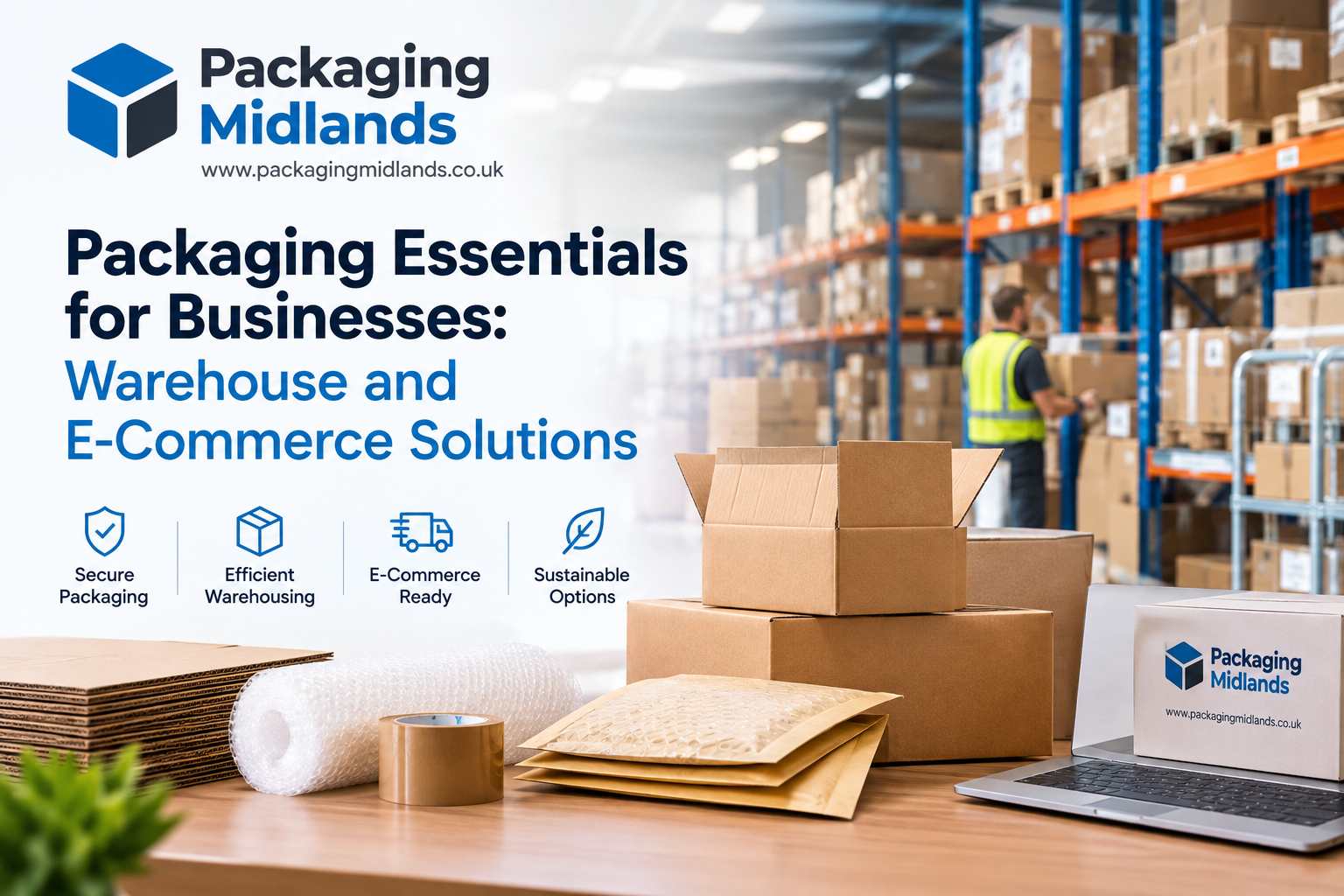
Packaging is easy to overlook when you are focused on getting orders out on time. Yet a poorly packed parcel can lead to a damaged product, an unhappy customer, and an avoidable return. That is why packaging deserves more thought than picking the cheapest box or bag.
The right materials depend on what you sell, how heavy it is, how easily it can break, and how far it has to travel. A small online shop may need mailing bags and cartons, while a busy warehouse may also need pallet wrap, strapping, and packing machinery.
Key Takeaways
- Choose packaging based on the product’s weight, size, fragility, and handling needs
- Use the right mix of cartons, cushioning, tape, mailing bags and protective materials
- Small businesses can keep packaging supplies manageable by stocking versatile everyday options
- E-commerce and warehouse teams can save time by organising packaging materials close to packing areas
- Pallet wrap, strapping and edge protection help keep larger loads stable during transport
What Packaging Essentials Does Every Business Need?
No single packing list fits every business. Most need some combination of boxes, bags, cushioning, tape, void fill, and protection for larger loads. The right packaging supplies make it easier to create a consistent packing process, whether you are running a small shop or a large warehouse.
Cardboard Boxes and Cartons
Boxes are still the starting point for many products. Choose a carton that can handle the contents without leaving too much unused space.
- Single-wall cartons suit many lighter products
- Double-wall cartons provide extra strength for heavier contents
- Made-to-measure cartons can suit unusual products
- Close-fitting boxes can help reduce unnecessary movement
For small-business packaging, keeping a few useful carton sizes on hand can make everyday packing much simpler.
Packing Tape and Dispensers
A carton is only as secure as its seal. Standard polypropylene tape is suitable for many everyday parcels, while stronger Vibac tapes are better for heavier cartons.
- 48mm tape is commonly used for carton sealing
- Low-noise tape can suit busy packing areas
- Crossweave tape adds reinforcement
- Tape dispensers can speed up regular packing tasks
Vibac 425 is a utility-gradfe box-sealing tape available in 48mm x 66m. Add it to your regular packaging supplies for reliable carton sealing.
Bubble Wrap and Cushioning
A box cannot stop a fragile product from knocking against its sides. Bubble wrap can wrap individual items, separate products, and cushion contents.
- Small bubbles suit smaller products
- Larger bubbles provide more cushioning for bulkier items
- Foam can help protect surfaces from scratches
- Air pillows can cushion products and fill space
For e-commerce packaging supplies, different cushioning options let you pack based on size and fragility rather than using the same material for every order.
Protectors, Fillers and Surface Protection
Some products need protection in specific places. Corners and edges are particularly vulnerable during handling.
- Foam rolls can help prevent scratches
- Corrugated cardboard can separate layers
- Air pillows can fill space and limit movement
- Edge protection can help vulnerable corners withstand knocks
For electronics, anti-static bubble pouches can provide static protection.
Mailing Bags and Polythene Packaging
A box is not always necessary. Clothing, documents, soft goods, and other lightweight items can often be sent in mailing bags or envelopes.
- Mailing bags suit many lightweight and flexible products
- Bubble envelopes provide cushioning as well as an outer layer
- Polythene packaging can help protect contents from dust and moisture
- Secure closures can help keep parcels sealed during handling
Mailing bags can also be useful e-commerce packaging supplies for businesses that regularly ship lightweight clothing, documents, or soft goods.
Pallet Wrap, Strapping and Load Protection
Warehouse packing does not end when the carton is sealed. Palletised goods need to stay together during transport.
- Hand film works for regular pallet wrapping
- Machine film can be useful for higher-volume operations
- Strapping can add stability to heavier or awkward loads
- Edge protection can help stop straps from damaging carton corners
These materials form an important part of warehouse packaging supplies, particularly when goods are moved in larger quantities.
What Packaging Supplies Do I Need for Different Products?
Start with the product. Consider its weight, dimensions, shape, fragility, and handling. The answer will usually depend on the type and quantity of packaging supplies your business uses every day.
|
Product/load |
Materials |
Size/choice |
|
Small/light |
Single-wall box, small bubble wrap, tape |
Close-fitting carton; 300–500 mm wrap |
|
Medium |
Carton, bubble wrap, void fill, tape |
Allow 25–50 mm cushioning |
|
Heavy |
Double-wall carton, large bubble wrap, strong tape |
50 mm tape or stronger |
|
Fragile |
Strong carton, small bubble wrap, foam |
Protect corners and leave cushioning |
|
Uneven |
Custom carton, crossweave tape, foam |
Match carton dimensions closely |
|
Electronics |
Carton, anti-static pouch, foam |
Use anti-static protection where required |
|
Clothing |
Mailing bag or envelope |
Choose a snug, secure closure |
|
Palletised |
Pallet wrap, strapping, edge protection |
Match materials to load weight |
How Should Small Businesses and E-commerce
Teams Choose Packaging?
For small-business packaging supplies, keeping the range manageable is often better than buying every type available. A sensible stock includes carton sizes, tape, bubble wrap, void fill, and mailing bags.
For e-commerce packaging supplies, speed matters as order numbers rise. Keep materials close to the packing bench. Storing cartons by size and keeping tape dispensers ready saves time across orders.
Warehouse packaging supplies need to cope with repeated handling. Depending on the operation, that may mean stronger cartons, pallet wrap, strapping, or machinery.
How Can You Build a Reliable Packaging Station?
Look at the products that leave your business most often. Measure them, weigh them, and note where damage occurs. Then develop a packing method based on those findings.
- Keep everyday materials within easy reach.
- Store cartons by size or product category
- Keep tape and cushioning beside the packing bench
- Remove damaged packaging from regular stock
- Test parcels before making a method standard
- Review damaged returns for recurring problems
A well-organised packing station makes packaging supplies easier to manage for small businesses and helps larger teams keep processes consistent.
Packaging Express Midlands supplies boxes, protective packaging, tapes, mailing products and pallet solutions.
Conclusion
Good business packaging balances protection, practicality and material use. A lightweight clothing order does not need the same treatment as fragile equipment or a heavy warehouse load.
Start by looking at what you send, where damage occurs, and how your team packs each order. Small changes, such as choosing a better-fitting carton or keeping tape within reach, can make a difference.
The right e-commerce packaging supplies can protect products, ensure consistent packing, and help businesses handle growing order volumes.
Frequently Asked Questions (FAQs)
What packaging supplies are most important?
Boxes, tape, cushioning, void fill, and mailing bags are used in many packing jobs. Warehouses may also need pallet protection.
What is the best box for heavy products?
A double wall carton with a secure seal and appropriate internal protection can accommodate heavier products.
Is bubble wrap suitable for fragile products?
Yes. Pick a suitable bubble size and protect corners, edges, and delicate surfaces.
Do small businesses need custom boxes?
Not always. Standard cartons suit many products. Custom sizes help with unusual shapes or excessive space.
What should warehouse packaging include?
It depends on the goods, but common options include cartons, tape, cushioning, void fill, pallet wrap, and strapping. These are common warehouse packaging supplies for businesses handling regular palletised or bulk shipments.